
About DCD 2026
The Annual International Gathering of Clojure Enthusiasts and Practitioners in the Netherlands! We welcome you to the 6th edition of our free and non-profit Clojure conference organised by the community, for the community with a full day of amazing talks in a friendly welcoming atmosphere.
When?
Dutch Clojure Days is scheduled to happen on .
Where?
Dutch Clojure Days will take place at the amazing City of Wesopa, in the stunning Amsterdam city district of Weesp (Herengracht 23, 1382 AG Weesp).
Tickets
Registrations are open and free of charge. Go ahead and get your ticket now!
Sponsors
DCD is a free event that is made possible thanks to our amazing sponsors and volunteers.
Partner



Supporter

Agenda
The agenda below is just an indication as our CfP is still ongoing!
8:30 9:00 | Reception | |
9:00 9:15 | Opening | #DCD26 team |
9:15 10:00 | Shapes of Together | Daniel Slutsky |
10:00 10:45 | Reevaluating the IDE | Adrian Smith |
10:45 11:15 | Coffee break | |
| Lightning Talks | ||
11:15 11:25 | clj-simple-stats: statistics that is actually easy to setup and use | Nikita Prokopov |
11:25 11:35 | MilaDB: 0-deps embeddable time-traveling database | Benny Andresen |
11:35 11:45 | Unlocking the power of SQLite with coffi (JDK 22 FFI) | Anders Murphy |
11:45 12:30 | Clojure as Your First Language: Shaping a Functional Mindset | Wendy Randolph |
12:30 14:00 | Lunch break | |
14:00 14:45 | Sound theory, music theory and analogue synthesis, with Overtone | Arne Brasseur |
14:45 15:30 | Bear's Browser Bet: A ClojureScript Story | Riccardo Cambiassi |
| Lightning Talks | ||
15:30 15:40 | Fun with JVM flags | Ray McDermott |
15:40 15:50 | Bringing async/await from Squint to ClojureScript | Michiel Borkent |
15:50 16:00 | On growing a community | Erik Assum |
16:00 16:10 | Closing | #DCD26 team |
Speakers
 clojurecivitas.gith…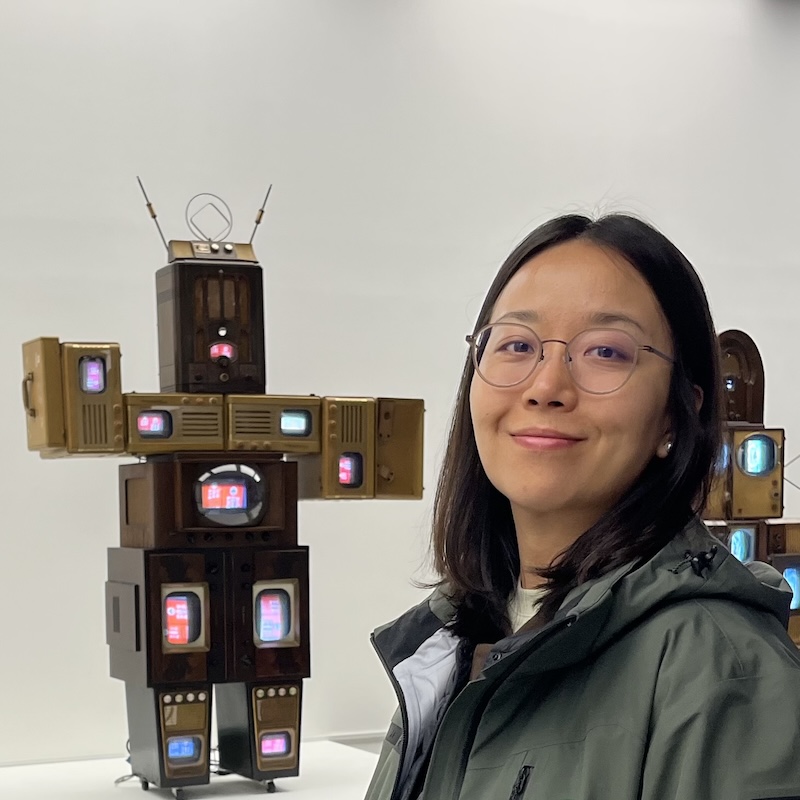
Shapes of Together
Community building raises questions. How do we create spaces where diverse voices are genuinely heard, yet still find common direction and reach decisions when needed? How do we support people of different backgrounds? How do we maintain continuity when individuals come and go, and what structures serve a group that keeps changing? How do we nurture ideas that challenge mainstream thought, yet remain welcoming to those encountering these ideas for the first time?
In times of uncertainty, we don't have to be alone. With care, building together becomes possible. We'll consider what that care may look like, and ask: what do we still need to build for each other?
Daniel Slutsky is a Clojurian and a mathematician. Since 2019, he has been involved in building Scicloj, an open-source community focused on helping Clojure grow. He co-maintains a few tools and libraries, including Noj, Clay, Tableplot, and ClojisR.
Siyoung Byun is currently a freelance fullstack Clojure developer living in Seoul, South Korea. She studied astrophysics for her undergrad in Canada, where she first got into programming and data analysis while running simulations of dying stars crashing into each other. Ever since she was introduced to Clojure, it quickly became her favorite programming language and her passion. Beyond software development and data analysis, she likes to hike, bike, knit, sew and snuggle with her cat in her free time.

 @phronmophobic
Reevaluating the IDE
For the past year, I've been working on Easel, a pure Clojure IDE. In this talk, we'll explore ideas from the past that were ahead of their time, demonstrate what's possible today, and imagine what the future of IDEs could look like.

lightning talkclj-simple-stats: statistics that is actually easy to setup and use
Benny Andresen
lightning talkMilaDB: 0-deps embeddable time-traveling database
The value proposition is: db-as-a-value, running in process, zero dependencies, backed by bbolt's simplified-from LMDB database design.
Wherever you would use SQLite and you're into Datomic-flavored Datalog, MilaDB could be an option.

lightning talkUnlocking the power of SQLite with coffi (JDK 22 FFI)
Coffi's macros and memory arenas make programming C from Clojure fun.
I do consulting work on: Clojure, JVM, SQLite, product design, rapid prototyping and performance tuning (with a focus on vertical scaling).
Currently I'm working for Lightweight Labs.

Clojure as Your First Language: Shaping a Functional Mindset

Sound theory, music theory and analogue synthesis, with Overtone
In this very hands-on talk I want to present some basic sound and music theory, and then go over the most common synthesis techniques, like additive synthesis, subtractive synthesis, frequency modulation, etc. Showing through live examples in Overtone how much fun can be had, and encouraging people to start exploring this wonderful world themselves.

Riccardo Cambiassi
Bear's Browser Bet: A ClojureScript Story
Bear is an award-winning note-taking app for the Apple ecosystem, loved by users worldwide. We brought it to the web using ClojureScript and Re-frame - with no backend, syncing directly with Apple's CloudKit from the browser.
After several years of development, here's what we learned:
- Re-frame patterns that survived the test of time
- wrapping JS interop with CloudKit: the undocumented parts
- integrating with WebAssembly from ClojureScript
- Offline-first sync and conflict resolution
- What worked great and what didn't
- Where ClojureScript saved us time and how the landscape evolved around us
- What's next: from CRDTs and embedded SQLite
This is a production story from someone who bet on ClojureScript years ago - and would do it
Ray McDermott
lightning talkFun with JVM flags

lightning talkBringing async/await from Squint to ClojureScript
Three years ago I presented Squint at Dutch Clojure Days: a dialect of ClojureScript that supports modern JavaScript (ES6) features such as async/await. Async/await allows asynchronous code to be written in a sequential style. The `await` keyword marks a point where execution pauses until a result is available, without blocking the runtime. When the result arrives, execution continues where it left off.
Since then, porting it to ClojureScript itself has been on the back of my mind. The main obstacle was that ClojureScript historically targeted older versions of JavaScript and was deliberately conservative about adopting newer language features. Now, a decade after ES6 was introduced, ClojureScript targets ES6 as its baseline. This shift has renewed interest in integrating features such as async/await directly into ClojureScript.
The talk covers the design constraints, compiler changes, and trade-offs involved in bringing async/await semantics to ClojureScript.

lightning talkOn growing a community
Lately, he's been lurking around open-source Clojure projects looking for easy bugs to fix. This is his way of paying back to the community.
Code of Conduct
All attendees, speakers, sponsors and volunteers at our conference are required to agree with the following code of conduct. Organisers will enforce this code throughout the event. We expect cooperation from all participants to help ensure a safe environment for everybody.
Need Help?
You can always reach out to us at events@clojuredays.org or on Mastodon.
The Quick Version
Our conference is dedicated to providing a harassment-free conference experience for everyone, regardless of gender, gender identity and expression, age, sexual orientation, disability, physical appearance, body size, race, ethnicity, religion (or lack thereof), or technology choices. We do not tolerate harassment of conference participants in any form. Sexual language and imagery is not appropriate for any conference venue, including talks, workshops, parties and other online media. Conference participants violating these rules may be sanctioned or expelled from the conference without a refund at the discretion of the conference organisers.
The Less Quick Version
Harassment includes offensive verbal comments related to gender, gender identity and expression, age, sexual orientation, disability, physical appearance, body size, race, ethnicity, religion, technology choices, sexual images in public spaces, deliberate intimidation, stalking, following, harassing photography or recording, sustained disruption of talks or other events, inappropriate physical contact, and unwelcome sexual attention.
Participants asked to stop any harassing behavior are expected to comply immediately.
Sponsors are also subject to the anti-harassment policy. In particular, sponsors should not use sexualised images, activities, or other material. Booth staff (including volunteers) should not use sexualised clothing/uniforms/costumes, or otherwise create a sexualised environment.
If a participant engages in harassing behavior, the conference organisers may take any action they deem appropriate, including warning the offender or expulsion from the conference with no refund.
If you are being harassed, notice that someone else is being harassed, or have any other concerns, please contact a member of conference staff immediately. Conference staff can be identified as they'll be wearing branded clothing and/or badges.
Conference staff will be happy to help participants contact hotel/venue security or local law enforcement, provide escorts, or otherwise assist those experiencing harassment to feel safe for the duration of the conference. We value your attendance.
We expect participants to follow these rules at conference and workshop venues and conference-related social events.